Wednesday, August 1, 2012

BWAC Opening

 BWAC

The crowd


Putting My Face On, officially installed.  

The opening was great fun.  I spent most of it enacting the bizarre meta-voyeuristic experiment of me watching people watching me performing in the video...I repeat, great fun.


I realized pretty quickly that the installation across from mine actually provided the perfect lurking spot.  I could hear what people were saying from there, and I could conceal myself among the hanging objects while I took photos.


Watching people look and listening to them talk to each other, I got the idea to add my notebook to the podium with a note asking people to write down their thoughts and feelings about the video.  I wanted there to be a more direct vehicle for people to communicate their thoughts to me, but I didn't want to interrupt their experience or color it by talking to them as the artist. 


The notebook ended up being an enriching element to the piece.  People actually got closer to read what was written, and stayed longer at the piece, thinking about the question.  It prompted them to have more involved discussions with one another, and prolonged solitary experiences.


And people actually wrote things!


I wish I could have left the notebook there for the entire run of the show, but it's the notebook I'm currently using as my sketchbook, and my mom and I went right from the show to the 2-week family beach vacation I'm currently on, so I really couldn't bear to leave it behind.  It's definitely a prototype for the kind of engagement I'd like to incorporate in future installations though.
I think the smaller scale did lend itself to a different, more intimate experience of the piece--it was powerful to see people standing face-to-face with it.


Also, the nature of it playing on a loop became important.  People would walk up to it when it was already halfway through, and they would stay to see how it began.  I like the idea of the process revealing itself in a different way to certain people, depending on when they encounter it (more specifically, I like the way it messes with the chronology, expectation, narrative, suspense of the experience).

Watching children engage with it was also great.  There was a pair of little girls who were sisters.  I saw the younger one sitting and staring for a while.  She got up and returned with her older sister...


She squealed, "Isn't it SO CREEPY?!"


The older one agreed that it was, and lingered, watching it for a full 2 loops before scurrying off to catch up with her sister and mom, who'd migrated to a different area of the floor.  I saw her tug her mom's skirt and point back at the video and I heard her say, "Mommy, I like the red one!"


Some other overheard responses include:
"I don't know if I'd call it art...I mean, I know it's art...it's just not my kind of art"
"Now that's an interesting piece"
"I wonder what motivated her"
"It's a shame it's not larger.  The installation itself leaves something to be desired"
"[looking at the title] That's hilarious! [watches closely] It really does make you think about getting ready to go out...how you cover your face to do it..."
"Her face is so pretty.  I don't know if the lipstick is enhancing or detracting from it"
"The ending is great--I just wish it were longer"
"I feel weird watching this--kind of perverted...voyeuristic?"
"It's like she's putting on war paint.  Look how she's sweating.  Look, you can see the sweat!"
"The technique of how she's applying it--so measured and even...and what a color"
"That red!  It's so...it's overwhelming.  Powerful.  Yeah, powerful"
The piece won Best Assemblage/ Installation, as chosen by Brooke Kamin Rapaport herself!  They added a ribbon label to the podium and gave me a certificate and even some prize money!


Exciting stuff folks.  The show is up through August 19--go see it for yourself if you find yourself near Red Hook before then.

Tuesday, July 24, 2012

Recent Work: There With You

After my grandmother died, I gained access to a collection of love letters that she'd kept hidden in a shoebox in her underwear drawer her entire adult life.  My grandfather was shocked to discover them, but was able to identify the writer as Alex, the American soldier to whom she'd lost her virginity.  The dates of the letters indicated that she'd maintained the correspondence even after she'd already married my grandfather!  Looking at old pictures of her from the same time period, I realized that she very closely resembled the archetypal female figure from the dating manual images I used for the Marked photo series.  But these letters indicated a thrillingly complicated level of scandalous behavior into the mix.  I realized how little I really knew about this woman I'd called Momo since I was a baby, how much of her life she'd buried in order to become the woman I'd known.  I was impressed and charmed by the energy she'd seemed to possess when she was 19, but I also felt how difficult her life must have been at that time (in post-war Germany, with very few options), and an overbearing sense of tragedy, knowing how her life ultimately turned out.

I decided to make a pair of videos in an attempt to honor this secret aspect of her life.  It seemed to lend a more personal context for this whole investigation of performed femininity/ gender expectations that I've been circling in my work.  I edited Alex's original letters together into a message that conveyed the most significant-seeming details, as well as the overall cadence and tone.  Using Alex's words as a prompt, I invented a response letter from her, which had to be informed by my knowledge of her life during the early years of her marriage (I could think of no other way to access her experience).  I recorded myself reading each "letter", as well as the sound of me writing out the words by hand, and paired the audio with corresponding pictures of each of them.  Editing/recreating the text enabled me to emphasize/ infuse the aspects that most clearly speak to the choices she made from the options she was given.  Reading the words in my own voice allowed me to embody and empathize with each of them.  It was a very intimate thing, but also became distanced in a way through the dramatizing/ performing of it--they became characters playing roles in a particular situation.  It wasn't as though I really knew either of them as people, so their words and pictures still felt archetypal, even with the familial connection.

As a piece, I envision the videos being installed in a dark space, with Alex's video playing first on one wall, then Momo's response video playing on the opposite wall after his has ended, set up in such a way that the viewer has to stand between them.  Something like this:


There is also an element of exploring the intersection of past and present-- how our present knowledge and understanding of events can manipulate the space of the past; how events of the past can inform the present and speak to us about contemporary experiences.

Anyway, here are the videos:

Saturday, July 21, 2012

Recent Work: Putting My Face On

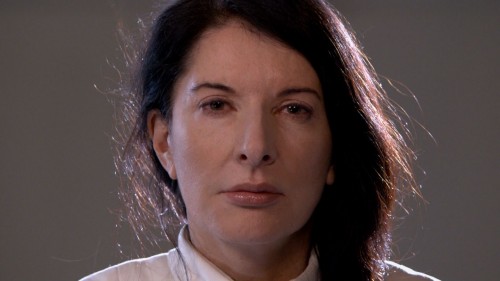
This is another incarnation of the red lipstick investigation.  I set up a camera on a tripod in front of me and slowly filled my face with lipstick, using the camera as a mirror.  I was thinking about concepts like "beauty" and "femininity" and "sexuality" and the ways in which those ideas are constructed and performed.  It was also a gestural action that had a lot to do with drawing and painting practices.  I think of it as a really ambivalent self-portrait, because actually, I'm trying to discover who my "self" even is, and what it means to embody a particular "self" in the first place.  What defines me?  What if I use those things that are supposed to define me in a different way?  I'd like to open things up and explore the possibilities within limitations/ impositions--I want to examine the things that make me most uncomfortable to discover why, and if there's a way to change them.

Here's the video.  The high-quality version was too large to upload, so this is a lower-res version, and is therefore not as dazzling as it could be: 


I showed this video, projected onto a wall, for my final post-bacc critique (I was still calling it Face Fill then).  It was recently accepted into a massive group show, Color, at BWAC (Brooklyn Waterfront Artists' Coalition), juried by Brooke Kamin Rapaport, former curator of Contemporary Art at the Brooklyn Museum.  The opening is on the 28th, and the show is up through August 19th.  Go see it!  It's installed in a 9.5x12.5" screen, and is somewhat more dazzling than what you see above as a result.  Incidentally, I'm interested to see how a more intimate scale will lend itself to the viewing, compared to the wall projection, which had an imposing effect.  


Here are some progressive stills I put together for the application:

mouth

eyes

full face

And some shots of my face after recording: 


mirror reflection

 
mirror reflection


straight on

I attended the senior thesis show with my face like this as an experiment, before most people knew about the video.  It was fun to see people's reactions.  I had a few friends kiss my face, hoping that their lips would leave negative space marks on my face.  It didn't have that effect, but it did lend them some lipstick for their mouths/ chins/ noses.

 evidence

Friday, July 20, 2012

Recent Work: Marked

This is a parallel endeavor to the Red Lipstick Project, for which I took images from a 1938 dating guide for single women that have been circulating on the Internet, printed them out, and kissed both the female and male figures in each image. I then scanned the images and cropped/ re-printed them. Before kissing them, I had the printouts up on my studio wall for about a month, just thinking about them. Each image was originally accompanied by text, encouraging adherence to some behavioral expectation. At first, the advice, as well as the didactic imagery, struck me as darkly funny. But the more I thought about it, the more tragic it seemed. These images were being sold to women as an archetype of how women are supposed to behave when interacting with men through the lens of what men should be expected to expect. It's a thoroughly fucked cycle of atrocious expectations for both men and women. A look at the headlines of Cosmo ("6 Secrets His Body Language Gives Away"; "4 Things That Freak Guys Out on a First Date"; "How To Turn A Guy On"; "101 Sex Positions To Please Your Man"), the unfortunate modern-day equivalent of a dating guide for single women, indicates that this is still a very real, very consumable ideological pressure. So, feeling this, I felt compelled to use my red-coated lips to offer these hopeless instruments of internalized self-loathing the unqualified affection that every human being deserves. It's an exercise in mark-making and gesture that is both sincere and critical.  The titles are lifted directly from the original "advice" text of the manual.

Examples:

Careless Women Never Appeal to Gentlemen

Men Don’t Like Girls Who Borrow Their Handkerchief and Smudge Them With Lipstick

The Last Straw (Your Date Will Never Call You Again!)

I showed these, in series, as part of my post-bacc thesis show along with the Red Lipstick Project video, and some stills from that.  Here are some installation shots:


Tuesday, July 3, 2012

Why I love Marina Abromović

I've known about her work for a while, and I've respected her for a while, but only recently have I really delved into her.  I've been reading interviews, and I recently watched her Art 21, and a documentary about her MoMA retrospective.  Watching the documentary made me wish at first that I'd seen the show--to have stood, surrounded by her works, reproduced or projected, would have been incredible, and to sit across from her and share that moment would have been an irreplaceable experience in my life.  Unfortunately, I didn't become aware of the show until after it had become somewhat of a circus--a strange competition to get the chance to sit with her, which was not something I was particularly interested in at the time. 

But I'm rapidly realizing that I have so much to learn from her.  In her Art 21, she shares an anecdote about a time in her youth when she tried to convince her father's military colleagues to use their airplanes to help her make drawings in the sky.  They refused.  So:
"Very early, I understood there are certain things I can't do.  But at the same time, I had a revelation that, actually, I can use anything I want--I can use the water, the islands, the earth, the fire, the air, and myself.  And this was the moment that I decided it's completely ridiculous to go to the studio and make something two-dimensional, when I could have the entire world there for me.  And that's when I stopped painting."
I've been thinking a lot about the idea of the world as a studio, so hearing her say this was incredibly inspiring and validating for me.  That, and her sense of humor about mortality: "You can't decide when you're going to die, but you definitely can rehearse your funeral."

Her commitment to the future development of performance art is also extremely significant.  She is committed to teaching just as much as she is committed to her own practice.  Here are some more quotes from her Art 21:
"When you die, you can't take your physical goods with you, but the good idea can stay.  I am very occupied now by my legacy.  It's very important for me, the preservation of performance art, and ow it got to develop, and what is the future of performance art."

"Ive been thinking so much, 'What is the role of an artist?  What is my function on this earth anyway?'  I think that being an artist is such a huge responsibility.  In my case, I create three groups of what I call 'Artitudes'--what I have to do as an artist.  I call the first group Artist Body, and it's just very simple--it's me performing in front of the audience.  Second is the Public Body--to create objects (I call them transitory because they're not sculptures) and circumstances in which the public can actually perform for themselves and get experience.  And the third would be Student Body, and this is my function as a teacher--that actually, when you come to one point of your life, that you really have to unconditionally transfer the knowledge to a younger generation of artists.  And not only transfer it, but also help them in the development.  It's really, in a way, a kind of fair dialogue, because they give you a sense of the time you live in (because they're young, and they understand the world differently), and you give them the experience"

This level of care that she has for the the development of the medium as a whole is apparent in the way she teaches--for the retrospective, she trained young artists to re-perform her most historically significant works.  For this process, she brought the group of artists to her house for an extended workshop, during which she tested their limits (she had them practice fasting, existing in silence, entering a lake naked--all exercises to practice being present).  The artists spoke about how much they had to trust her in order to willingly participate in something like this, and how transformative the experience was.  Before the opening of the show, Marina spoke with all of them about how much she was trusting them now--that her life was essentially in their hands.  She was passing her ideas, critical moments of her life, on to the next generation of artists, removing her own ego from the experience, so that each situation could survive for a new audience.  Also, I was impressed by the fact that there are photos from every moment of her life--every incarnation of every performance; personal moments with Ulay.  Those and her video pieces are what enables her work to survive/ what enables a documentary or a retrospective of such magnitude to exist.  Her curator also said that they made editions of one photograph from each of her key performances, and sold those on the market.  An important lesson for me to keep in mind, and one I think I'm already learning for myself with this concentration on archiving and the construction of history.
Primarily, what strikes me though, is her immense generosity.  She is so generous with herself, so raw in her presentation of self.  She makes people feel because she is so open in her own feeling.  At one point in the documentary, the curator speaks about how, when he first met her, he thought, "Oh God, she's in love with me!"  But slowly, upon getting to know her better, he realized, "No, she's not in love with me; she's in love with the world."  As someone who feels a kinship to that sensibility/ propensity, I adore that description.  And that love is palpable in her work.  She makes herself so vulnerable and receptive, whether it's to an audience, or a partner, or to her own capacity for endurance.  She pushes herself to her limits, and extends beyond them.  She tests herself, and manages to exceed her own expectations.  She manages this because she believes in herself deeply.  She trusts herself deeply.

And she isn't arrogant when she speaks about her life or her work.  She's honest and genuine and matter-of-fact, and always open in her expression.  She speaks about using the pain she experiences in her performances as a vehicle that ushers her into a new level of consciousness, that it becomes almost holy, and that the power of any piece lies in the potential for the viewer to be able to harness that energy and experience it in that moment of connection, regardless of their own motivations or attitudes--in the potential to "elevate human spirit," within the performer and within the participating public.  And the manifestation of that power is evident in the faces of the people sitting across from her--in their tears, in their smiles, in their hands placed empathetically over their hearts, in their nods of reverence.  She clarifies something for them in this bizarre socially phenomenological moment that is at once incredibly intimate/ personal, and blatantly public.  At first, it seems like the fact of the audience or the line of people waiting for their turn would diminish the intimacy of the shared gaze, but it doesn't.  It actually magnifies it, and makes it visible for multiple simultaneous participants with multiple perspectives.  One experiential moment shared between her and one participant is actually a multitude of simultaneous experiential moments for every observer.  Everyone in that room is engaged.  And that energy is the most powerful thing imaginable.  

She's also just seductive as hell, and absolutely revels in it.  She talks about red being a power color that energizes her, and about her allowing herself to indulge in her love of fashion once she gained more material security after her split with Ulay.  She's so unbelievably enigmatic and charismatic and charming and gorgeous, but is also so firmly grounded in herself and in her own ambition and her own capability.  She is poised and stoic and elegant because of the unshakable trust that she's built with herself.

I want to be that. 


Thursday, June 21, 2012

New Project: Rebeccah Ulm Archives

I'm starting a new project.  It's still in its very early conceptual stages, but I feel comfortable writing about it now before I actually get to work on it.  Right now, the concept is a website.  I've already starting creating the new blog (there's nothing up yet, but it technically exists: http://ruarchives.blogspot.com/).  The idea is that I will post visual evidence of my existence.  The sorts of things a person would encounter after I've died, which would give that person a sense of the life I've lived and the relationships I've cultivated.  I want this to be extremely inclusive.  I'm talking scans of everything from Mother's Day cards to journal entries to sketch books.  I wrote in my sketchbook:
"I want this to include both the kinds of things that Mom would look at to remember me by and the kinds of things that future art students would look at to learn about me in their art history class [because if I'm going to construct my own personal history of myself, I might as well do it with the presumption of eventual historical significance].  Everything that is me is included.  Everything.  Not chronologically either.  Everything at once"

The only kind of "organization" I see happening here will be some abstract blogger tags: People (probably mostly photos of me with family members, friends; maybe some correspondences, depending on how I decide to deal with privacy concerns), Places (I've lived, visited, experienced--mostly photos, maybe descriptions from travel books or written accounts?  Press releases, photos from gallery shows/ museum exhibitions), Things (I've owned, collected, coveted.  This could get really out of hand--it could be everything from books to bracelets to albums) Thoughts/Ideas (this will likely be mostly journal/ sketchbook writings), Projects (resolved manifestations--there'll be some decision-making as far as what to include here).  This is purely a visual thing (scans of documents, photos of the aforementioned categorical items).  Each posted image will be accompanied by a brief description, of the sort you'd find on the back of a polaroid, or as wall text.  I think it'll be an interesting problem-solving challenge to incorporate "important" moments/events/relationships that were not photographically documented/ whose documentation has been lost. 

I suppose this whole thing will be a way for me to sort through some of my notions about history, identity, memory, nostalgia, etc.--how all of these things are constructed, what elements of our lives inform who we are, how much power we have to decide/ construct our own existence.  Can scans of emo journal entries and old family photos, combined with academic papers or intellectual musings really convey an accurate concept of who I am?  I don't know.  But that's the thing, isn't it?  What do we leave behind as evidence of our lives?  Can "history" ever really tell the whole story of a person, let alone an entire era?  And from what (whose) point of view was that history composed?

I think a really important element of this thing is that I am the one deciding what to include--I'm the composer, and the material is the evidence of my own life experiences.  Because I am alive, doing this in the present, the things I choose to post as evidence still have the capacity to affect the life I'm leading.  In this morbidly self-absorbed investigation, I'm going to look through all of the files on my computer, all of the embarrassing journals I've kept for years, whatever things my Mom has saved in the attic, my emails, etc.  That's a lot of very personal shit, with a lot of consequential power.  I haven't decided how to edit or if I will edit at all.  It might simply be a matter of timing--waiting until things become less potent before posting them (things that happened in elementary school don't seem as dramatic now, as I'm sure things that happened in high school won't seem so by the time I'm in my late 30s...or maybe they will...who knows?).  I guess it's a question of objectivity, if such a thing even exists.  Also, of privacy--what is private?  Do things cease to be private in the name of history?  Do I need to more actively construct some sort of narrative or mythology for this to count--like, pretend to write my own biography, but from the perspective of someone who is not me, but knew me?  I don't think I want to do that.  I want it to be more ambiguous than that.  And I'm only 23--I want there to be room for growth and development and adaptation as things change and new evidences are acquired.

Anyway, starting this project is dependent upon the new hard drive I just ordered arriving for me to back up the mess of files on my computer.  Once I've done that, I can clean everything out so that my computer will actually run Photoshop and Final Cut.  Then I can get down to business scan-wise.

This blog will continue to exist, because it serves a completely different purpose.  I'll update with recent projects after the hard drive situation is under control.

Monday, May 21, 2012

Final Crit Notes 5/7/12

Me: play video (Face Fill)

SD: Did you do this the night of the senior opening, when you showed up with your face covered in red?

Me: No, I did this 4 times.  This is footage of the first attempt--the night of the opening was the 4th

SD: It's interesting, because this really makes you think of getting ready to go out, and you actually did.

JG: Like a teaser--switching around the chain of events; implying there's more information to be revealed/ building interest

JW: Was each recording different?

Me: The color and light and path of the movement changed each time, because it was spontaneous, and I wanted to try it with different shades.  This one worked the best

TF: Are we seeing what you see? How did you set this up/

Me: Using the camera as a mirror

CA: You filmed this on your own?

Me: Yes

SD: Compared to the other videos--simple and basic.  Action appeals to painting--space to fill.  Sensory thing not in the other work

CA: Simplicity of action. More echos and meanings than prior video--more provocative in simplicity. Why stop at face?

Me: I didn't actually, but the face part worked best.  Filming my body was difficult and choppy and I didn't get what I wanted

MS: Places in video where you could stop--image of eye, nose--think of reversing it

SW: conceptual idea with face? Seems more deliberate

Me: Thinking about contour drawing directly on face

SD: Like deliberateness of how you're filling in--precision around eyes and nose is very satisfying.  When I saw you at the opening, I compared it to Wild At Heart, thinking of a more manic action, but this is really purposeful and paced instead

TF: Like the idea of exploring--sense of joy when you go outside the lines of your lips.  Ending dilemma.  Mistrel shows, baggage of painting face.  Compelling energy.  Conveying sense of 'what if I did this?'

CF: Love the travel of it--going from mouth to cheek to nose, etc.  Trying to figure out what's going on/ what comes next.  Associations fluctuate from clown to war paint--think I have a sense of what it is, but then it isn't--keeps changing

SD: You've been dealing with these cultural norms of beauty (50s icon).  This video is far more interesting than that imagery because it speaks more abstractly about decorating the body--goes beyond social norms

SL: See it as a mask?  Was it like wearing a mask at the opening

Me: That was more of a spontaneous decision as a result of poor time management...But yes, the mask aspect of it is important

TF: Going to the opening, it's like you wanted to continue to contextualize the experience

Me: I was thinking about it as applying to get ready and go out, and thought to try recording the removal as though I'd actually gone somewhere, in later attempts.  Thought it would be more authentic if I actually wore it out somewhere--opportunity to test it.  Also wanted to play with the ending/ prolong the looking at the end

CA: Address that next time.  Ritual paint--there is a point where we wait for gaps to fill in (forehead)--you could edit more; add other sequences in (like Matthew Barney), push more absurd.  Get someone to shoot for you.  Edit to underscore important moves--what would happen if you continue onto body--foot, floor, whole room, whole building?

SD: Can be a trap to push singular action.  This could be the beginning of something else entirely--this video doesn't have to be the main focus.  The next thing might look nothing like this.

TF: Kusama--polka dot environments--how she generates.  Your process is a part of that flow

CA: Keep thinking of that sequence in Cremaster 4 with the tap dancing---absurdity is reinforced with other activity--on screen for less time/ folding in other things actually ends up extending/ prolonging duration.  Take advantage of medium of video.  Love it.

GC: Rooted in high degree of realism--beauty of seeing eye, spots on tongue.  Covering with color makes realist manifest, more powerful--closeness to camera very blunt, where the power is.  Distance from the camera is powerful.

JW: Seems really important for camera to follow where your eyes see, for the narrative.  Elements where the color (flesh/red) or something doesn't work--formal elements?  Narrative is resolved, so crisp.  I feel like we shouldn't be waiting for the resolution we're expecting--we know how it's going to end.  Would like to see a resolution that isn't just the completion of the narrative.

MS: Finding where to suspend what we are waiting for--increase that tension

JG: Messing with chronology (by going to the opening) is really interesting--another level to realism.  Traveling through immediate narrative, but also larger narrative--social cues, class (choosing Revlon versus Chanel; your nose ring--signs that this is a certain person using a certain brand.  How would you apply Chanel? More precious because of price? Different narrative)

SW: Another moment could be capitalized on--concentrate on the gesture.  Moment where time is suspended/ where narrative is frustrated--ending should be longer, slower, elongating time with action

RR: Really rich setup.  Site specific drawing.  So many things--too complex, but you need to figure out.  Sense of descent, abstraction, self-loathing, desire not to be--the color could go to the edges more--when face is not in space but is space--poetic: pace, timing.  Notion of makeup being employed in a way that makeup is not supposed to be employed--should be explored.  Essay on makeup--one on men and one on women.  Masking, purpose of masking seems important.  Eye, mouth as oracle--present, but not given a voice.

GC: Very poetic--very tender in gesture; sensual--strikes me differently than clown or morbid overtones.  Can see you admire yourself; the application is so delicate--caressing, like a lover's finger.  Beautiful moments--on eyelid.  Narrative of topography/ journey of head/ structure of head dictates movement.  Adornment.

SD: Realist--useful way to not just cycle through the literal choices.  Next time maybe not lipstick or makeup.  Surrealist elements could be pushed (most surrealist artists used hyper-realistic imagery)

GC: good journey--start with drawings--keep going!

DF: From my angle, sometimes half the screen would be obscured.  Keep thinking about painting/ covering up part of the screen--become more interesting when things are obscured/ partially revealed